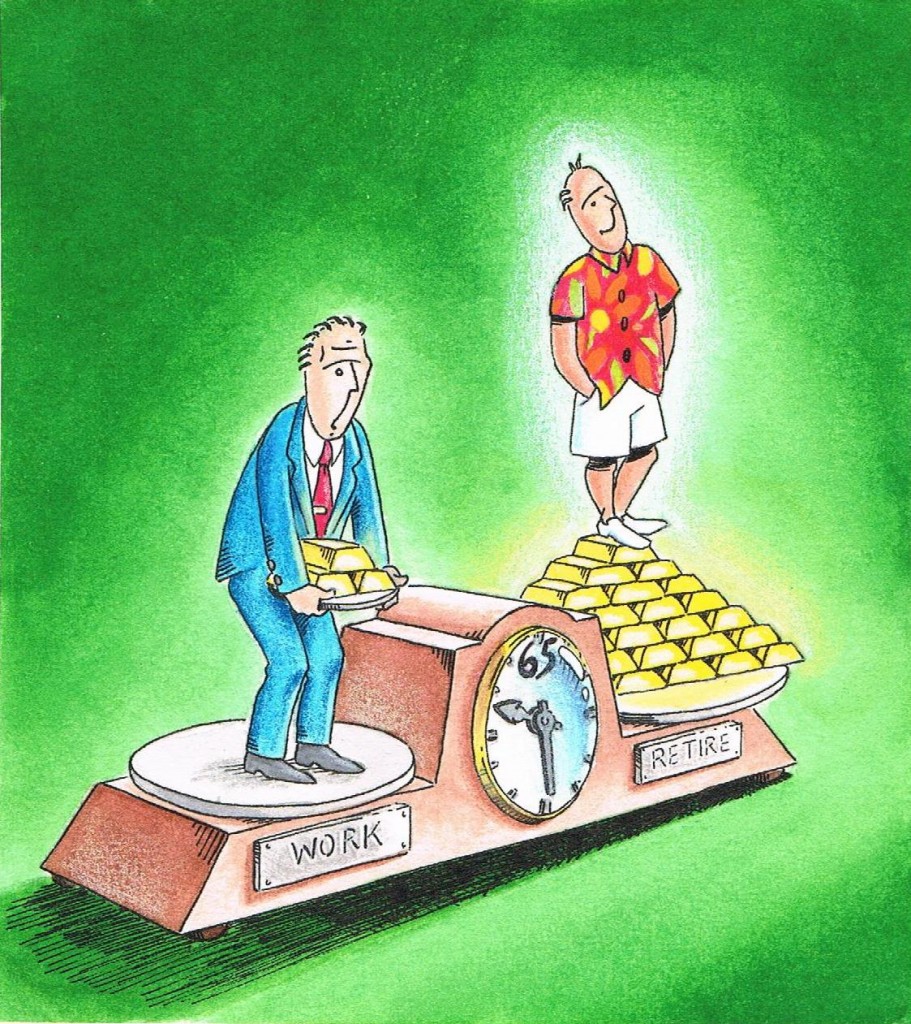
Will you be ready to retire financially independent for 20, 30 or more years? Are you carefully planning using mathematics?

Creating income for a long life.
The number of North Americans aged 90 is expected to quadruple by 2050 – reflecting the trend of life spans increasing steadily since 1900. Life expectancies represent the average number of years someone of a certain age is expected to live.
Higher life expectancy: People are living longer.
Retirees are living much longer than 20 years ago. Many will run out of retirement savings in the first decade of retirement. Once your source of guaranteed income dries up, you are left relying on Canada Pension Plan (CPP). Without a corporate pension, RRSP savings could be withdrawn too quickly from the capital saved reducing the income provision, years before your life expectancy.
Others may withdraw too little and miss enjoying the travel or adventure that retirement has promised our culture.
How long will $1,000,000 last?
Using a hypothetical case, where a 55-year-old retiree needs $40,000 pre-tax income above his CPP benefit per year on which to live in true financial independence, we find that $1,000,000 lasts slightly more than 38 years. This would allow him to provide an income at 1.5% inflation until the retiree is 93 years old. The capital must earn after tax income at least at a rate of 4% on average during retirement. Source: Adviceon
Some facts to consider.
- The earlier and thus longer you plan to retire based on your life expectancy, the more years your capital savings have to grow. You will face inflation which is here depicted at a modest level of 1.5% so your investments must earn more per year or risk being outpaced.
- When you are 50 to 60, you tend to become less of a risk taker and may shy away from equities. When you use money market funds, GICs and term deposits you will experience – generally, lower returns. By contrast, if you start younger, you can invest more heavily in equity funds or equity stocks taking more risk for potentially larger gains, though this is never guaranteed.
- Investing for and during retirement for the long term, consider a mix of lower risk guaranteed investments plus a mix of equity and dividend funds.
- Life is full of ups and downs. Review your retirement goals with your advisor and adjust them as your life circumstances change.