
It is important to invest with calculated thinking, with a written financial plan utilising experienced investment guidance. When the market is rising in a bull market, we feel ecstatic and have less fear. When it appears that the market might become bearish, we can be intimidated wondering what’s ahead.
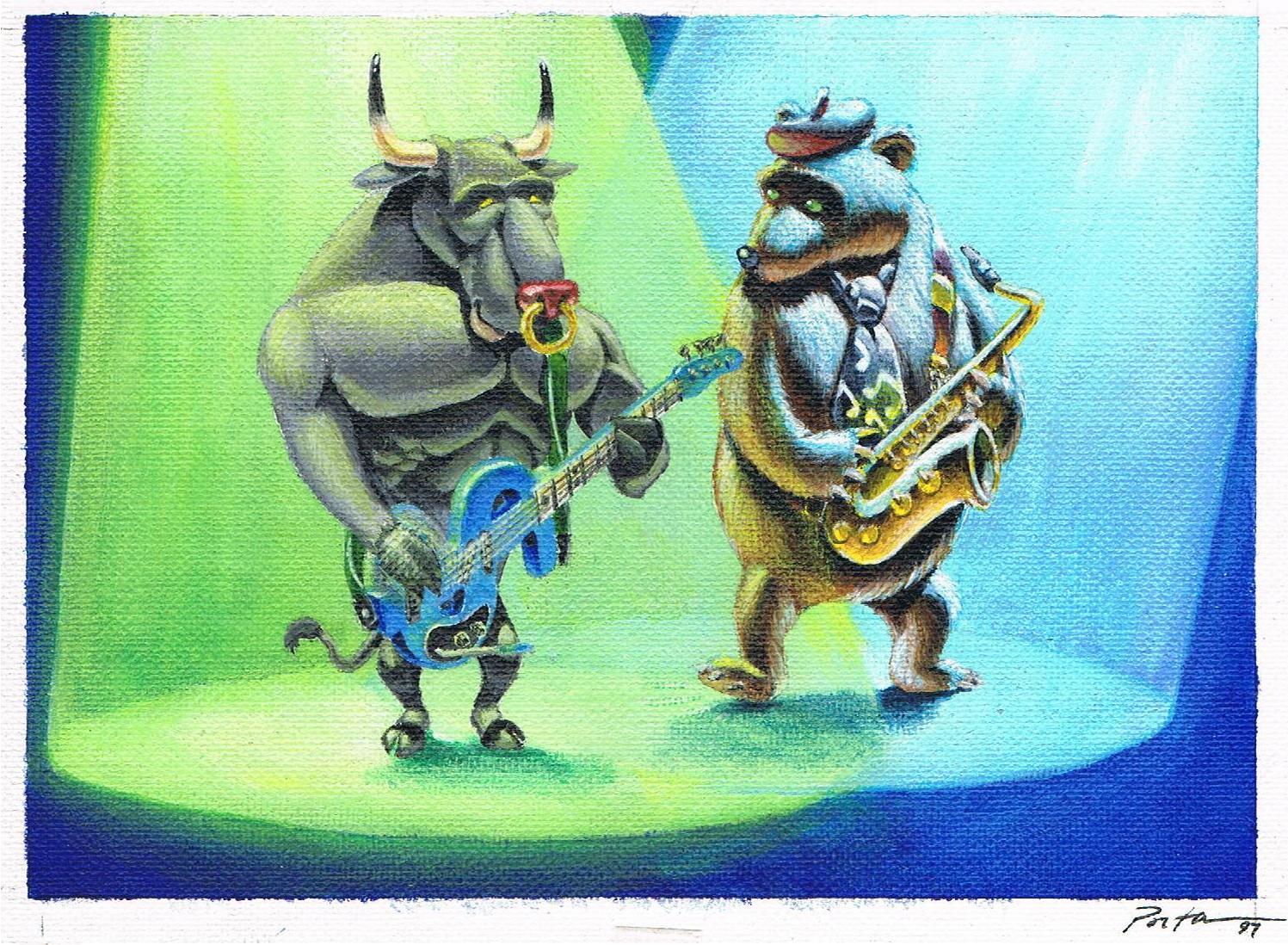
Illustration: AdviceonMedia
The bull and the bear are two parts of the market cycle. Both periods offer investor potential – the bull for gains and profit-taking, and the bear for bargain pricing of investments. Though they play a different sound of music, an investment manager can coordinate investments, so they both work together into a progressive market ensemble over time.
Choose market wisdom over emotion to rule decision making.
Based on their long-term experience fund managers know how to use scientific measuring tools to govern the complexity of buying and selling using criteria and wisdom that mitigates erratic emotional impulse.
Investment funds are more diversified than one single stock, as they invest in many stocks pooled in one fund (funds do not hold more than 10% of their pooled securities in any one security). Because investment funds invest in many stocks, you are more diversified than putting all your eggs in one single stock.
Don’t become impatient – expecting instant gratification.
Once you choose an equity investment such as an equity fund, it is important to understand that you may need to hold it through a market cycle, especially if it goes through a correction in a bear market (losing some of its value). For example, many in the 2008-9 market crash were patient and watched many stocks rise higher in value than before the market downturn. It was a long hard wait for many which paid off. Those who sold off equity investments out of impatience with the market lost a portion of their initial investment.
Recently the stock markets have surged in a bullish period due to President Trump’s business promises.
Avoid looking only at past returns.
When selecting an equity investment such as an equity fund, don’t decide only on past performance. A good fund manager’s investment funds will lose markedly less than similar funds. It is also important to understand that even great performances in different market circumstances may not be able to be replicated.
Your advisor can go over the best fund managers comparing many funds to benchmark figures examining the potential for good performance.
Avoid passive investing.
An advisor can help you rebalance your portfolio periodically. It is important to occasionally sell investments to take a profit and rebalance a portfolio by buying other investments. Talk to us about these and other strategies before investing.